


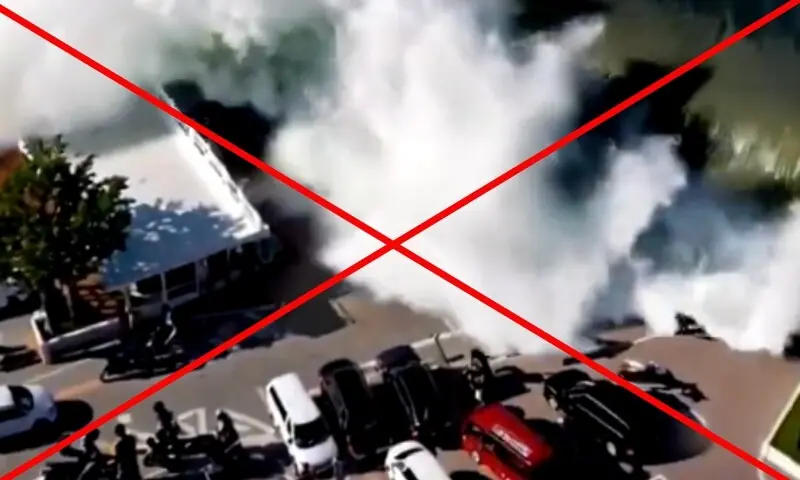

CLAIM
Viral video of huge waves washing away people, cars during Venezuela earthquake
WHAT HAPPENED
On June 24, 2026, Venezuela was struck by two powerful earthquakes measuring magnitudes 7.2 and 7.5, with the epicentre located about 160 kilometres west of Caracas. The back-to-back quakes caused widespread devastation across the capital and the neighbouring coastal state of La Guaira, collapsing hundreds of buildings, damaging critical infrastructure, and leaving thousands trapped beneath the rubble.
Initially, authorities reported 188 deaths and more than 1,500 injuries, but the toll continued to rise as rescue operations progressed, reaching nearly 1,500 fatalities within days. More than 54,000 people were reported missing, while the United Nations estimated that nearly seven million people could be affected by the disaster.
The US Geological Survey (USGS) estimated more than 10,000 deaths were possible from the magnitude 7.2 and 7.5 quakes, which would place them among Latin America’s deadliest of the last century.
The Venezuelan government declared a state of emergency as search-and-rescue teams from at least 17 countries joined relief efforts, with international aid arriving to support survivors and assist in the ongoing response.
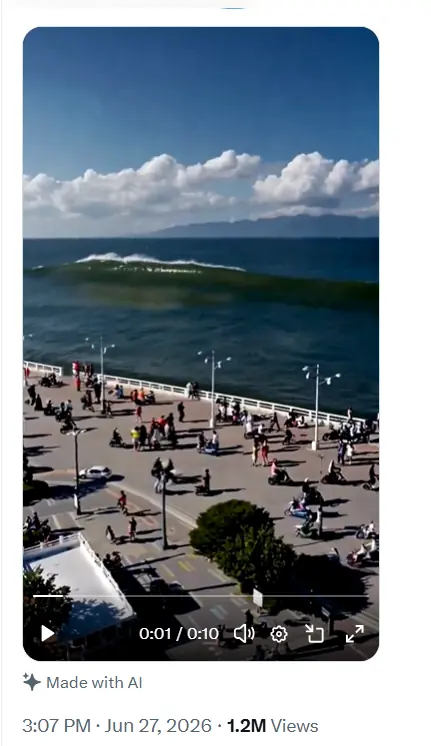
Amid this, a video has been doing the rounds on X since June 27, allegedly showing gigantic waves crashing on the Venezuelan coast, washing away people, vehicles and buildings. Several users claimed the visuals were recorded during the catastrophic earthquakes.
While some people raised alarm over the viral clip in the comments section — calling it a “tragedy” and “catastrophe” — others questioned if the visuals were real.
WHAT WE FOUND
A keyword and reverse image search was conducted to corroborate whether visuals seen in the viral clip were reported by any Venezuelan, US, or other international news outlets; however, it did not yield any results.
Analysing the video revealed several logical inconsistencies commonly associated with AI-generated content. Firstly, the massive wave appears unrealistic, with an unusually smooth and exaggerated shape that does not resemble the behaviour of natural oceanic waves. The colour of the water at the front, a deep and dark mossy green, also appears at odds with the rest and does not resemble how waves look when they crash against the shore.
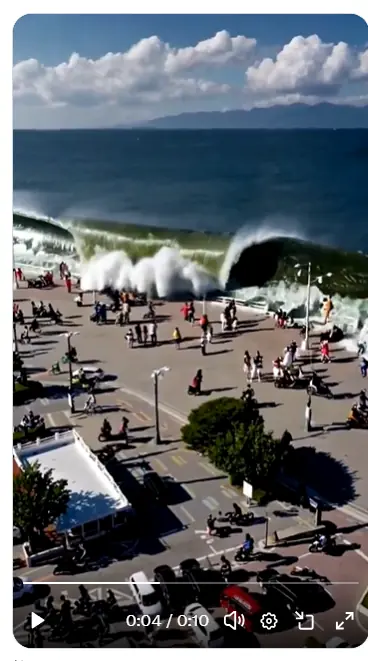
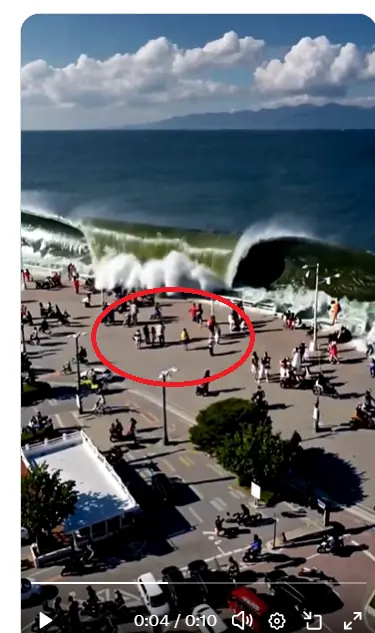
Secondly, despite the enormous wave rapidly approaching the coastline, many people continue walking normally, while others remain stationary and appear to watch the wave instead of attempting to flee. Such behaviour is inconsistent with how people typically react in the face of an imminent natural disaster.
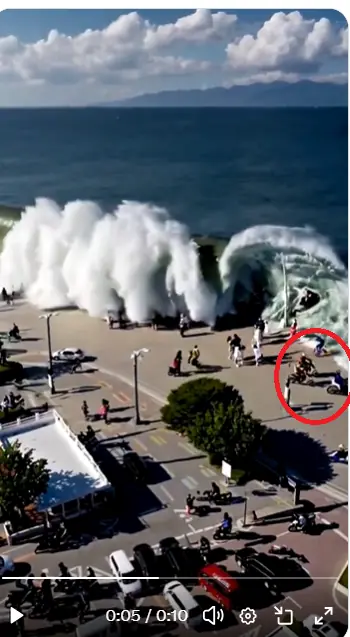
Further examination also revealed unnatural movement of motorcycles, which appear to move in a robotic and inconsistent manner rather than exhibiting realistic motion.
Analysing the video using AI detection tools showed that Hive Moderation assessed it as having a 93 per cent probability of being AI-generated or containing deepfake content, while TruthScan flagged it as having a 58pc probability of being AI-generated.
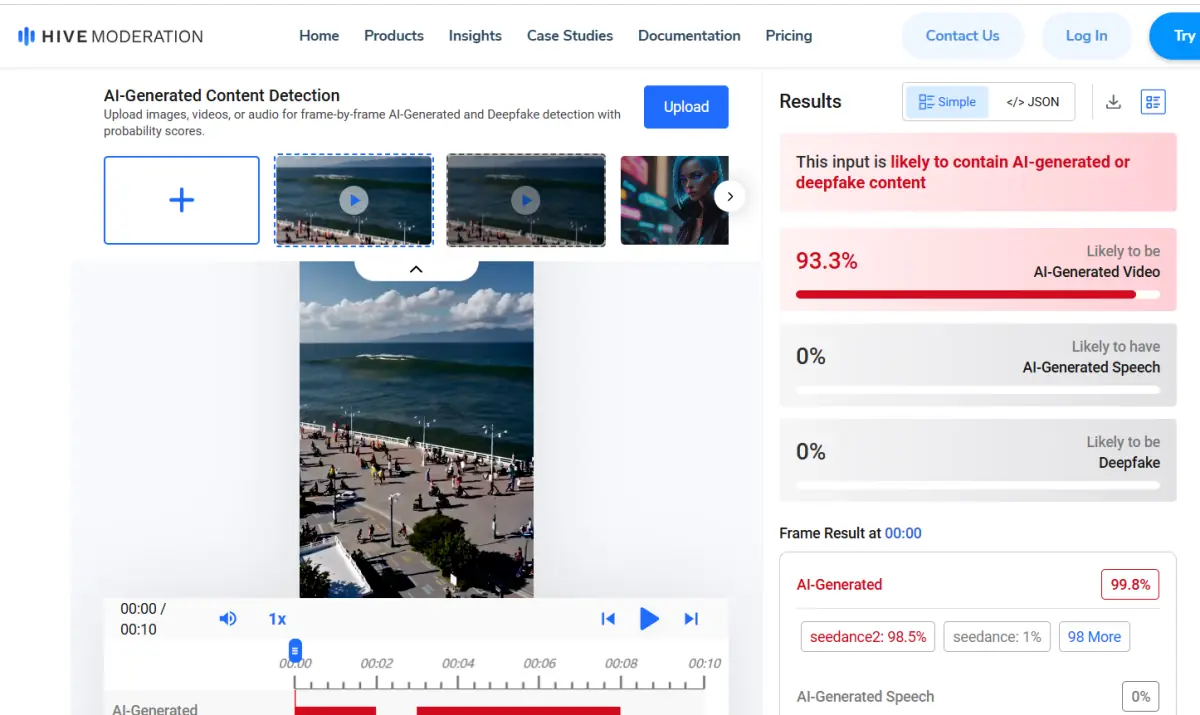
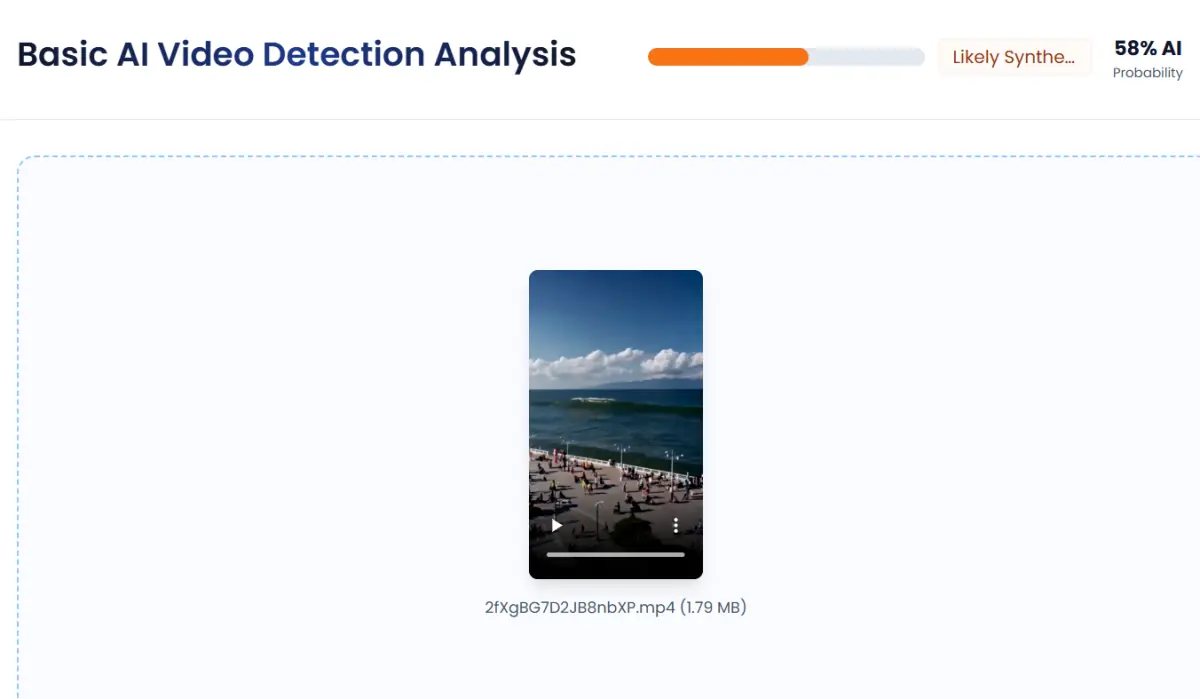
A reverse image search of the video’s keyframe further revealed that the same clip had been circulating online long before the recent earthquakes in Venezuela. It was shared on TikTok on July 4, 2025, in the context of a tsunami, where it was also labelled as AI-generated content.
@ai_reelhub The Moment Before Impact: A Tsunami Rises #tsunami #tsunamiscene #coastaldrama #cinematicai #apocalypseshort #disasterincoming #waveofdoom #unseenchaos #aiartvideos
♬ 오리지널 사운드 - Ai_reelhub - Ai_reelhub
The same video was later posted on Instagram on May 22, 2026.
Furthermore, the video on X was later assigned the “Made with AI” label by the platform, indicating that it had been identified as AI-generated media.
Conclusion
It is false to say that a viral video shows gigantic waves crashing on the Venezuelan coast amid the recent earthquakes.
The video is AI-generated.
This article was published by iVerify Pakistan under its initiative tackling myths and disinformation around climate, supported by Irada and IMS